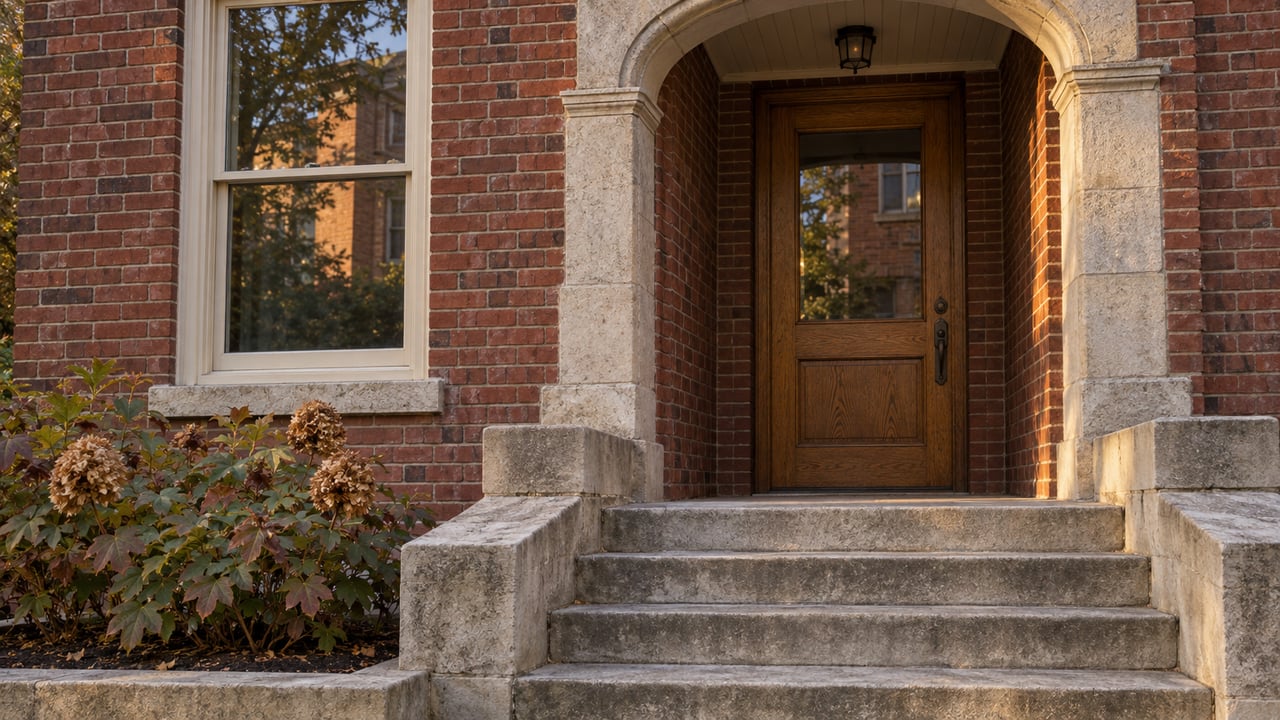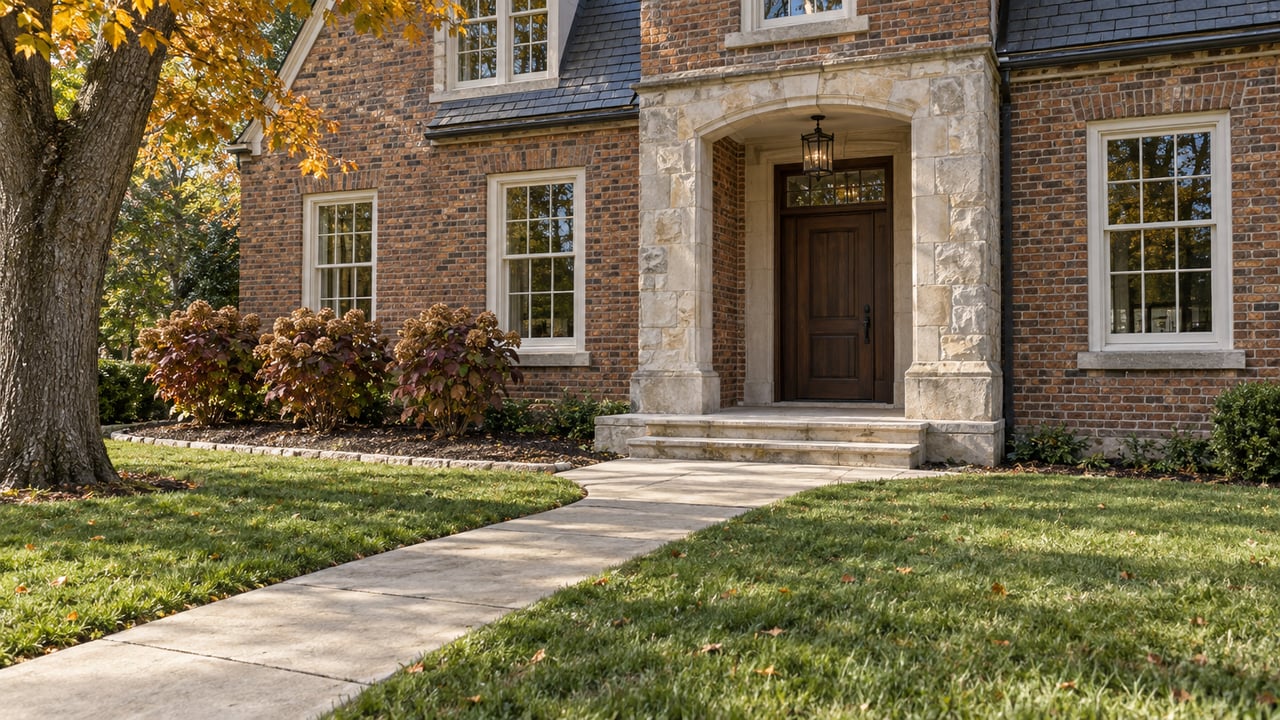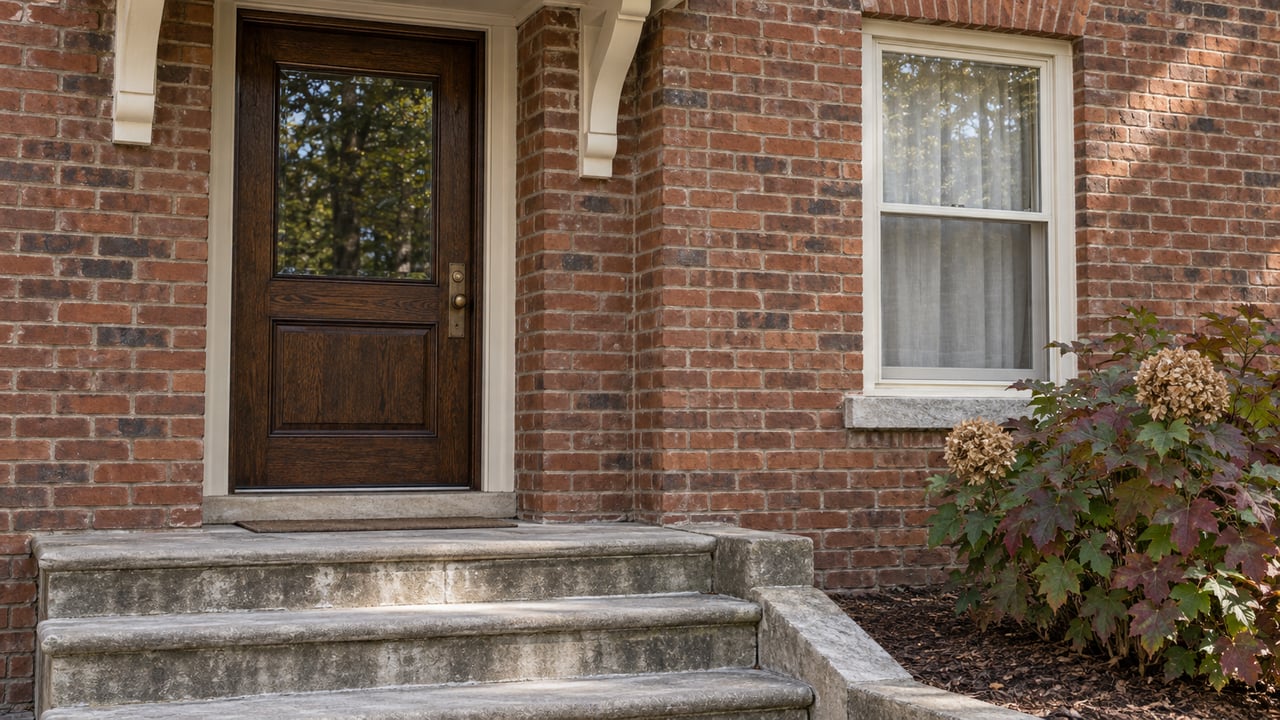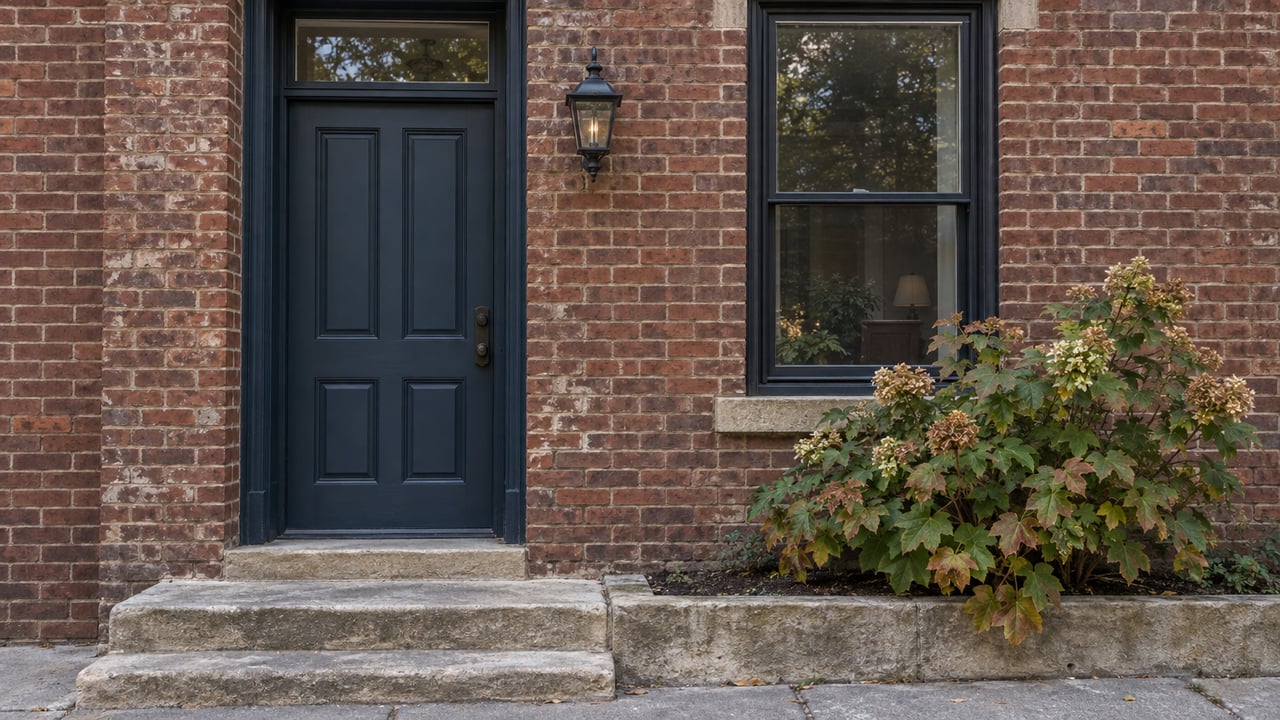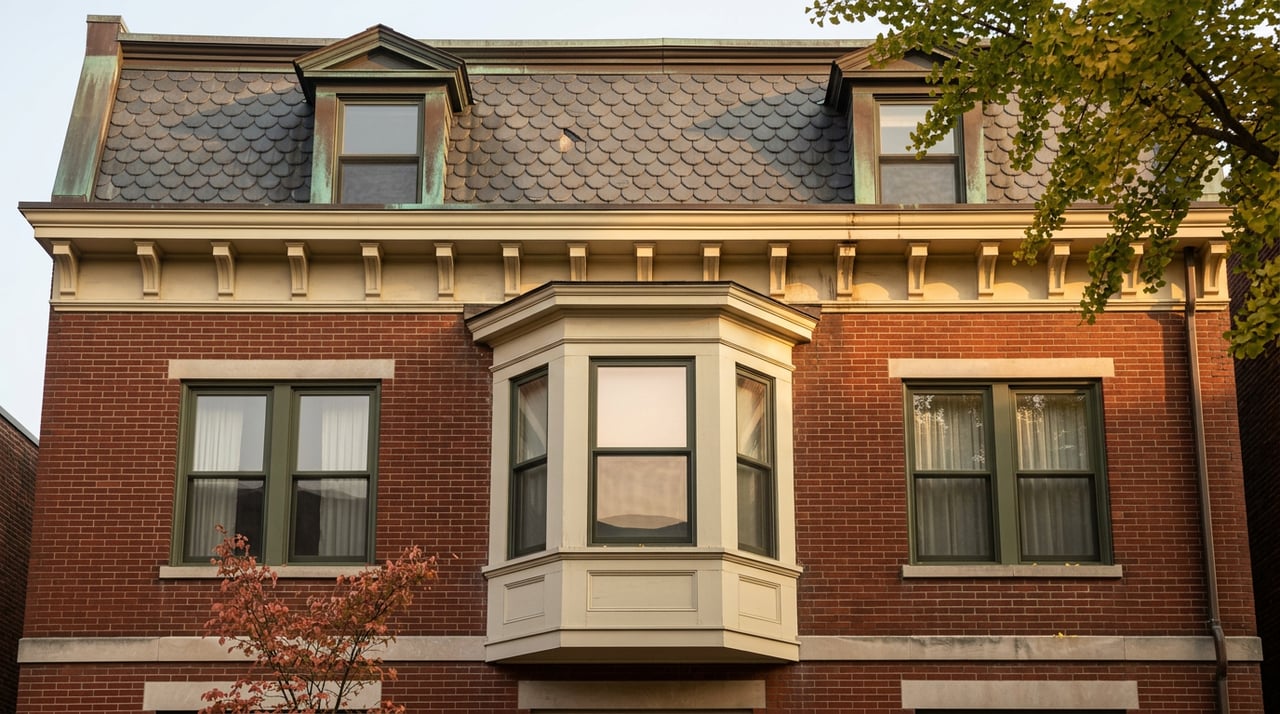
Two Italianate flats sit six blocks apart in Fox Park. One is asking in the mid-$400s and shows a refinished pine floor from July 2026. The other is listed under $200,000 with a note asking buyers to bring a flashlight. On the surface, the spread looks like condition. It isn't only condition. It's an ordinance.
Since February 2011, the Fox Park Local Historic District has covered the entire neighborhood, from I-44 down to Gravois. That single line in the city code is doing more to shape the price gap than most buyers realize when they filter listings by dollar per square foot.
The overlay that touches every block
The district holds roughly 350 contributing buildings, and about two-thirds of them are two- to six-family flats. Styles run Italianate, Second Empire, Eclectic Revivals, and Arts and Crafts, most built between 1885 and 1915 by the German craftsmen who settled the area. That housing stock is exactly why the neighborhood is protected. It's also why the rules apply everywhere.
Here is the piece buyers usually miss. Once a property sits inside a City historic district, any exterior work needs a permit except painting wood trim, even work that would not normally trigger a Building Division permit at all. The permit application is then routed to the Cultural Resources Office, which reviews it against the Fox Park–specific standards adopted by ordinance.
What that means in practice, for the buyer looking at a project listing:
- A front door swap is a design review item, not a hardware-store errand.
- Window replacements, cornice repairs, tuckpointing color, and porch rebuilds are reviewed against a written standard.
- Additions and infill construction are reviewed by the Preservation Board itself, which meets the fourth Monday of every month at 1520 Market.
- The rules apply the same way whether the seller left the house in showroom shape or gutted to studs.
That last point is the one that flips the math.
What the price spread looks like right now
The neighborhood is small, so a handful of listings moves the averages. Recent Redfin figures put the average Fox Park sale price at roughly $315,000 last month, down about 7.5% year over year, with a median list of $340,000 across eight new listings and a typical time to pending of around 34 days at about 1% below list. Two homes sold in the neighborhood in the most recent month.
Underneath those numbers, the actual current inventory reads more like two markets sharing a zip code:
| Listing profile | Typical ask | What the buyer is really pricing |
|---|---|---|
| Turnkey rehabbed flat, systems replaced | $340K to $475K | Someone else's completed design review |
| Two-family with recent capital work | $260K to $340K | Historic pine refinish, HVAC, roof already through the CRO process |
| Shell or "bring a flashlight" project | Under $200K | Every future exterior decision, plus the tax credit application |
The listing at 2643 Ann Avenue that closed recently as a fully renovated two-bedroom with quartz counters, zoned HVAC, and refinished hardwood is priced against a very different reality than the multifamily on the same block advertised as "no utilities, use caution." Both are inside the same overlay. Only one has already spent the design-review budget.
Why the "cheap" listing is not always cheap
The clearest illustration is not a market statistic. It's a Preservation Board case that has become almost folklore in local rehab circles. A Shenandoah Avenue owner wanted to install a specific front door that did not meet the Fox Park standards. The Cultural Resources Office staff located an acceptable paint-grade wooden door from another supplier. The owner appealed. The Board denied the appeal 4 to 1.
The Fox Park Local Historic District Ordinance was written to protect the exterior fabric of the neighborhood. In practice, that means the design of your new door, the profile of your replacement window, and the color of your tuckpointing mortar are decisions the city gets a vote on.
This is a good rule for the neighborhood. It is also a real line item for the buyer of a project house. When you underwrite the rehab, you are not just pricing labor and materials. You are pricing custom wood-sash windows over vinyl, a limited palette of masonry finishes, and design consultants who know how to walk an application through the CRO Hotspot at 1520 Market. That renovation floor is why the spread between a $180,000 shell and a $400,000 finished flat is wider in Fox Park than in a South City neighborhood without a design overlay.
The seller of the shell is not being unreasonable. The seller of the finished flat is not overreaching. They are pricing two different products in one district.
The credit stack that can invert the answer
Here is where the overlay stops being a tax on the buyer and starts working for one who plans carefully. Because the entire neighborhood is a certified historic district, contributing buildings are eligible for a stack that few other South City pockets can offer. The City of St. Louis notes that state and federal historic tax credits combined can cover roughly 45% of qualifying rehabilitation cost when a project is approved and completed to the applicable standards.
The sequence that a buyer of a project home in Fox Park usually needs to run:
- Verify the building is a contributing structure in the Fox Park Historic District map on file with the Cultural Resources Office.
- Engage a historical consultant early to compile the application to the Missouri Department of Economic Development for the state credit.
- Line up a contractor with a track record of working through the CRO. Firms local to South City have quietly built specialties around this workflow.
- Sequence the design review, the state credit approval, and the federal credit application before major exterior work begins, since credits are contingent on the work matching the approved plans.
- Model the after-credit cost against a comparable turnkey listing in the same corridor before committing.
Run the math this way, and a shell that looks 40% cheaper than a finished flat can pencil out very differently than a spreadsheet built on list price alone. Skip the sequence, and the same building becomes a very expensive lesson.
Nothing here is tax advice. It is a description of a process the city has documented publicly and that experienced local contractors have worked through many times. A CPA and a preservation-literate attorney belong on the team before any offer is written.
The neighborhood the renovation is buying into
The design overlay would be a harder sell if the neighborhood around it were not doing what it is doing. Along South Jefferson and Shenandoah, the ground floor of Fox Park has quietly turned into one of the more talked-about food corridors in the city. Little Fox at 2800 Shenandoah, from chefs Craig and Mowgli Rivard, landed on The New York Times' best restaurants list in 2021 and remains a reason people who don't live here still know where Fox Park is. Coffeestamp at 2511 S. Jefferson, opened as a micro-roastery in 2018 by brothers Patrick and Spencer Clapp, has grown into a full coffee bar with a South American-inflected menu. Press Pizza & Pasta at 2509 S. Jefferson, from the group that ran The Lucky Accomplice, took over some of that block's energy after Savage & The Accomplice served its last night in September 2025. Lona's Lil Eats at 2199 California and Grand Rising at 2736 Sidney round out the walkable rotation.
The preservation side is moving too. DeSales Community Development's Preservation 2 initiative is modernizing 71 affordable units across 28 historic buildings in Fox Park, Tower Grove East, and Benton Park West, and the Koken Apartments, 78 units carved out of the former Koken Barber Supply warehouse, gave the neighborhood a new source of ground-floor foot traffic without touching the flats. The 300-foot steeple of St. Francis de Sales Oratory still anchors the western edge.
For a buyer, that context matters because it changes the reasonable exit assumption. A rehabbed flat here is not being resold into a static market. It is being resold into a neighborhood where new operators keep signing leases within a five-minute walk.
A short FAQ
Does the historic district apply if I only plan interior work? Interior work is generally not reviewed by the Cultural Resources Office. The overlay is about exteriors, demolitions, and additions. That said, structural changes that affect the exterior envelope, including new window openings or dormers, will be reviewed.
Can I tear a Fox Park building down and rebuild? Demolitions inside a City historic district are reviewed by the Preservation Board. The default posture is preservation of contributing buildings, so demolition approvals are the exception rather than the rule.
Is a two-family flat treated differently than a single-family? The design standards apply the same way. What changes is your financing path and your tax-credit sequencing, since owner-occupied and investment properties access the federal credit differently.
How long does design review typically add to a rehab timeline? Straightforward exterior items handled at the CRO staff level can move within weeks. Anything appealed to the Preservation Board falls onto its monthly calendar, which is worth building into any construction schedule.
Ready to look at Fox Park with clearer numbers
The listings you see on the portals show one price. The number that matters is the one you get after mapping condition, design-review scope, and tax-credit eligibility onto the specific building in front of you. That is the work we do before you write an offer, and the reason our buyers rarely find themselves surprised at the second walkthrough. Reach out to Team Bravo and we will walk a Fox Park block with you, listing by listing, and tell you honestly which houses are priced as houses and which are priced as projects.